
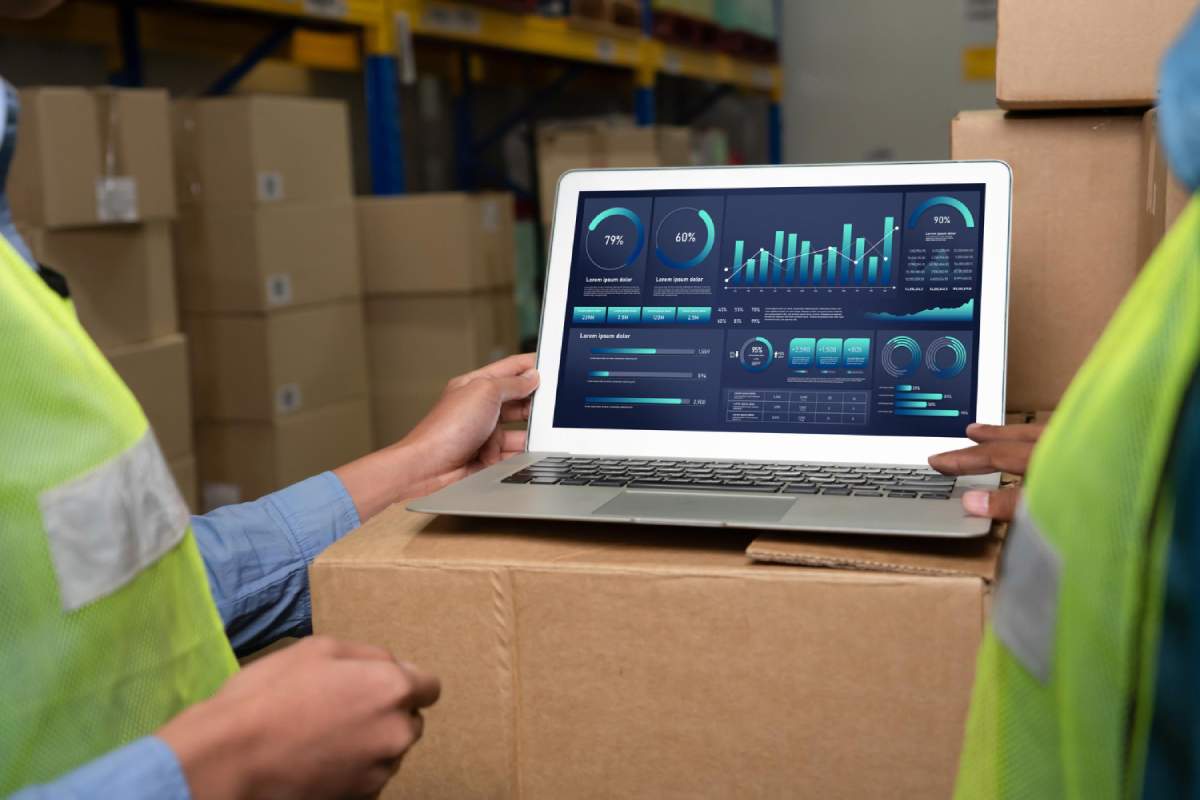
Operational Time Savings Through Digital Planning
Corporate logistics digital planning plays a fundamental role in ensuring maximum efficiency in resource utilization within its processes. In particular, operational steps such as route optimization, delivery scheduling and vehicle loading sequencing are carried out much faster and error-free through digital systems. Thanks to this planning, businesses can complete their shipments on time and at lower cost. In addition, while resource waste is minimized, the distribution of tasks among employees is also made more balanced. Time savings facilitate the integrated operation of business processes and increase overall efficiency. Such systematic improvements support not only daily operations but also long-term growth targets. Technological planning tools prevent manual errors and ensure that the entire process becomes transparent and measurable.
The Power of Accuracy in Inventory Management
Corporate logistics accurate inventory management in its structures provides a major advantage in terms of both cost control and customer satisfaction. Tracking warehouse entries and exits through digital systems makes it possible to monitor products in stock in real time. In this way, situations such as excess or shortage of products can be identified at an early stage and solutions can be produced quickly. Especially e-commerce logistics in its processes, the high variety of products makes accurate inventory tracking even more important. Preparing orders quickly, meeting customer demands on time and preventing unnecessary product investments depend directly on the success of inventory management. When a proper system is not established, order cancellations and delivery delays increase. In the long run, this both raises costs and negatively affects brand reputation.
Route Optimization in Corporate Transportation
Corporate transportation route optimization in its services ensures that the delivery process is carried out efficiently and on time. Thanks to technology-supported software, the most suitable route for each shipment can be determined. This reduces fuel consumption while also enabling deliveries to be completed quickly. Especially in intensive urban distribution, routes can be updated dynamically by analyzing traffic data and road conditions. Preventing delays increases on-time delivery rates. Thanks to route planning, vehicle capacity is used more efficiently and transportation costs decrease. In addition, these systems contribute to a more planned and fair use of the workforce. Proper route usage increases customer satisfaction while also helping to reduce environmental impacts.
The Impact of Automation in Warehouse Management
Corporate logistics warehouse management in this field covers the proper storage, placement and preparation of products for shipment. In this process, automation systems accelerate the workflow by minimizing human errors. Product locations can be tracked digitally, which reduces picking times and lowers labor costs. Barcode systems used in warehouses minimize the possibility of error in data entries. E-commerce logistics in business models with high time pressure such as these, more orders can be prepared in a short time thanks to automated warehouse systems. This makes it possible to respond quickly to customer demands. Automation systems also facilitate product rotation, speed up the tracking of returned products and ensure more efficient use of warehouse spaces.
Process Tracking with Integrated Systems
Corporate transportation and e-commerce logistics in its processes, the integrated operation of all operations plays a key role in increasing efficiency. Thanks to the management of order, inventory, transportation and delivery systems on the same platform, data flow becomes seamless. This structure offers managers the opportunity to monitor the entire process from a single panel and intervene instantly. Integrated systems not only prevent possible delays but also accelerate customer notification processes. Thus, customer satisfaction increases directly. Since all units work on the same data, reporting processes also become more consistent. Thanks to these systems, businesses can easily handle growing order volumes. In addition, with the reduction of manual processes, human resources can be used for more strategic work.
Decision Support with Advanced Reporting
Corporate logistics making data-driven decisions in their processes is of great importance for long-term success. Reporting systems guide managers by analyzing many metrics, from delivery times to warehouse occupancy rates. Thanks to these analyses, weak points can be identified early and improvement efforts can be initiated. In addition, this makes it possible to carry out flexible planning according to the seasonal intensity of operations. E-commerce logistics reporting carried out in their processes, especially for campaign periods, enables a better understanding of customer behavior. This contributes to making marketing and sales strategies more effective. Data-supported decisions enable businesses to move toward their growth targets with firmer steps. It also provides a measurable and sustainable structure in terms of resource planning.
Conclusion
Corporate logistics to increase efficiency in their processes, technological infrastructures, planning systems, automation solutions and data analytics should be used together. Through the effective management of these components, businesses both gain a cost advantage and increase customer satisfaction. Corporate transportation and e-commerce logistics in different logistics areas such as these, these approaches form the basis of operational success. Structures supported by the right tools reduce errors, accelerate business processes and increase competitiveness. Especially for companies aiming for growth, efficient logistics systems are an indispensable part of long-term success. Businesses that act with a continuous improvement-oriented perspective secure a sustainable place in the industry.
Frequently Asked Questions
What is corporate logistics?
It is the logistics model in which companies professionally manage their supply, storage and distribution processes.
Why is stock management important?
Accurate inventory tracking ensures that orders are fulfilled on time and completely.
What is route optimization for?
It enables delivery routes to be planned in the most efficient way, saving time and cost.
How does warehouse automation work?
It works by tracking products with barcodes and managing operations through digital systems.
What are integrated logistics systems?
It is a structure that enables all logistics components to be managed through a single platform.
Why is efficiency so important?
It reduces costs, accelerates processes and increases customer satisfaction.
How can corporate transportation processes be improved?
They are improved with digital planning, monitoring systems and data analysis tools.
What does advanced reporting provide?
It helps operational decisions to be made on a data basis and reduces risks.
How can e-commerce logistics be more efficient?
It should be supported by automation, accurate inventory management and fast delivery models.
Why should businesses switch to digital systems?
Digitalization is essential to increase competitiveness and reduce operational errors.